If you own a rental property in Ontario, knowing how to increase rent in Ontario correctly is one of the most important things you need to understand. I get asked about this all the time, from new landlords who recently signed their first lease agreement to experienced investors who still aren’t entirely sure they are following the right steps.
The rules around rent increases in this province are specific.
What you are allowed to do depends on the type of unit, when it was first occupied, and how the Residential Tenancies Act applies to your situation. Getting the process wrong means your increase has no legal effect. Worse, you end up at the Landlord and Tenant Board defending a complaint from your tenant.
This guide covers everything you need to know: which rental units are rent controlled, what Ontario’s 2026 and 2027 guideline allows, how to give proper notice, when you need LTB approval, and what makes a rent increase illegal.
Understanding Rent Control in Ontario
Ontario’s rent control rules are established under the Residential Tenancies Act (RTA). They apply to most people renting a home, apartment, or condo for residential purposes. But not every rental unit in Ontario is subject to these rules. This is where many landlords run into trouble.
One of my clients raised the rent on a longtime tenant by what he thought was a reasonable amount, only to find out later he had exceeded the guideline on a rent-controlled unit. The process had to be reversed entirely. Understanding rent control before you act is far less costly than dealing with the fallout after.
Which Rental Units Are Rent Controlled Under the Residential Tenancies Act
Rent control applies to units first occupied for residential purposes before November 15, 2018. This covers the vast majority of rental units across Ontario: older apartments, houses rented for years, and basement apartments completed before 2018. For these units, you are not permitted to raise the rent above the annual provincial guideline without approval from the Landlord and Tenant Board.
The rule is tied to the unit, not the tenant. If one tenant moves out and a new one moves in, the unit’s rent control status stays the same. What changes is the rent amount you are free to set when signing a new lease. Once a new tenancy begins and a rent amount is established, the guideline governs all future increases for as long as that tenancy continues.
The Vast Majority of Units Built Before November 15, 2018
A lot of landlords assume rent control is tied to the type of property or the age of the building in a general sense. It is not. The date the unit was first occupied for residential purposes is the deciding factor. A unit built in 2014 and rented out that same year falls under rent control, even if the building was brand new at the time. I’ve seen this trip up investors who bought newer buildings expecting full flexibility on rent, only to discover their units were occupied before the 2018 cutoff date.
New Units Exempt From Ontario Government Rent Control Rules
The Ontario government removed rent control from units first occupied for residential purposes on or after November 15, 2018. This applies to new construction condos, newly built houses, and most new basement apartments completed after that date. If your tenant moved into one of these newer units, you are not restricted to the annual guideline when setting the new rent amount.
This gives landlords of newer units more flexibility to adjust rent to reflect current market conditions. Keep in mind, though, that even exempt units require 90 days written notice before any rent increase takes effect. The guideline does not apply, but the notice requirement does. Skipping it still leaves you with an invalid increase.
Ontario’s Annual Rent Increase Guideline for 2026
Each year, Ontario’s Ministry of Municipal Affairs and Housing publishes the annual rent increase guideline. This number sets the maximum percentage a landlord is allowed to raise rent on a controlled unit in a given calendar year, without going through the LTB for special approval.
Legal Rent Increase: How Much Are Ontario Landlords Permitted to Charge?
For 2026, Ontario’s rent increase guideline is 2.1%. On a unit renting for $2,000 per month, the maximum legal rent increase works out to $42 per month, bringing the new rent to $2,042. You are not required to raise rent by the full guideline amount. You are free to raise it by less, or not at all. But exceeding 2.1% on a rent-controlled unit without LTB approval is not permitted.
I hear this question from landlords every year: “How much am I allowed to raise the rent?” The answer is the guideline. Nothing more. Unless you qualify for an above guideline increase, which I’ll cover shortly. You are also only permitted to raise rent once every 12 months per tenancy. If you raised rent in March 2025, your next increase is not allowed to take effect until March 2026 at the earliest.
To address another question I get frequently: no, a landlord is not allowed to raise rent by 50% on a rent-controlled unit. A 50% increase would be an illegal rent increase. The only scenario where a large jump would be permitted is on an exempt unit first occupied after November 15, 2018. Even then, proper written notice is still required.
How to Increase the Rent Legally in Ontario
Even when you are fully entitled to increase the rent, there is a process you must follow. A verbal notice, a text message, or an informal letter does not meet the legal standard set out in the Residential Tenancies Act. Ontario law requires a specific form, delivered within a specific timeframe.
Giving Your Tenant 90 Days Written Notice
You are required to give your tenant at least 90 days written notice before a rent increase takes effect. The notice must state the amount of the new rent and the date the increase begins. The effective date must fall on the anniversary of when the tenant first paid rent. So if your tenant pays rent on the first of each month, the increase must also take effect on the first of a month, at least 90 days out.
Ninety days is a firm legal requirement. Eighty-nine days is not enough. I’ve spoken with landlords who were certain they had done everything correctly, only to discover they had miscounted the notice period by a day or two. The increase was invalid and they had to start the process over. Count carefully, and build in a buffer.
What Happens When Proper Notice Is Not Given
If you fail to give proper written notice, the rent increase has no legal effect. Your tenant is not required to pay the higher amount. You are not allowed to retroactively apply the increase. The only path forward is to serve a new, valid notice and wait another 90 days. This pushes back your timeline by months, sometimes longer, depending on where you are in the lease cycle.
Setting the New Rent Amount With the Correct Form
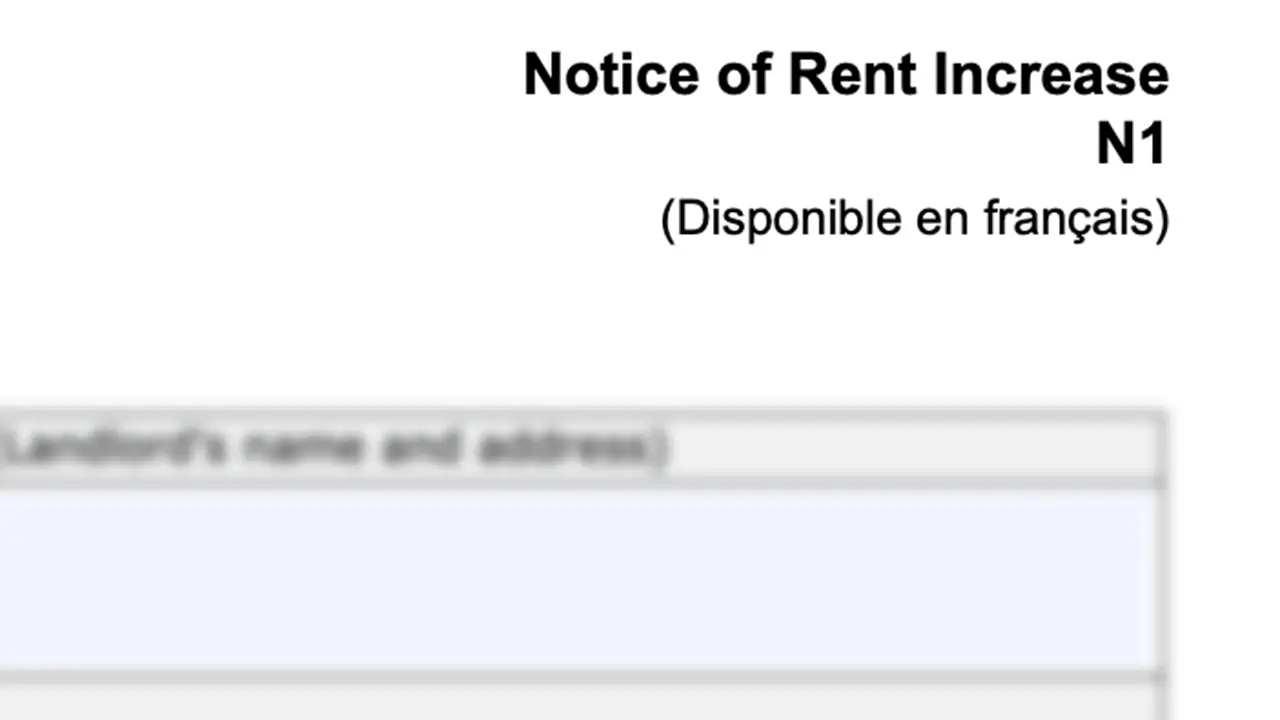
Ontario landlords are required to use Form N1 (Notice of Rent Increase), issued by the Landlord and Tenant Board. The form includes fields for the tenant’s name, the rental unit address, the current rent, the new rent amount, and the date the increase takes effect. Using Form N1 protects you in any dispute. If a tenant challenges your increase at the LTB, the board will ask to see your N1. An informal letter in its place puts your increase at risk. For units that are exempt from rent control, landlords must use Form N2 (Notice of Rent Increase) instead.
Deliver the completed N1 by hand to the tenant, by courier, or by mail. If you mail it, the 90-day period does not begin until five days after the mailing date. Factor this into your planning.
Above Guideline Increase: Getting Permission to Raise Rent Higher
In certain situations, Ontario landlords are entitled to apply to the Landlord and Tenant Board for approval to raise rent above the annual guideline. This is called an above guideline increase, or AGI. It requires a formal application. It is not automatic. The LTB reviews the request before granting it.
Property Taxes, Municipal Taxes, and Capital Expenditures That Qualify
An AGI application is typically based on one of three things: an extraordinary increase in municipal taxes or charges, an extraordinary increase in utility costs, or capital expenditures. Capital expenditures are major repairs or improvements to the building: roof replacement, elevator modernization, significant plumbing work. Not routine upkeep.
In my experience, the most common AGI applications I see from landlords involve sharp increases in property taxes or security services. The LTB reviews each application and determines what portion of the increase is justified. Landlords who pursue an AGI should document all costs carefully and file through the LTB’s official process. It takes time, but for significant capital investments, it is worth pursuing.
What Counts as an Illegal Rent Increase in Ontario
An illegal rent increase is one that goes above the annual guideline on a rent-controlled unit without LTB approval. It also includes raising rent more than once within a 12-month period, applying an increase without giving 90 days written notice, or failing to use the correct Form N1.
When a tenant believes their rent increase is illegal, they are entitled to file a complaint with the LTB. The board is able to order the rent rolled back to the previous amount and, in some cases, require the landlord to repay any amounts collected above what was legally allowed. The signs of a bad landlord in Ontario often include exactly this kind of mistake: charging above the guideline or skipping the required notice period. Knowing the rules protects you and your tenants equally.
Resolving Issues With Tenants at the Landlord and Tenant Board (LTB)
The Landlord and Tenant Board handles disputes between landlords and tenants in Ontario, including rent increase complaints. Both sides are entitled to file applications. As a landlord, you might file if a tenant refuses to pay an increase you served correctly. As a tenant, a filing would come if they believe the increase exceeded what was permitted or was not served correctly.
LTB hearings take time. The backlog in recent years has been significant. This makes it even more important to get the rent increase process right before you serve notice. Not after. A well-documented, properly completed N1 form is the strongest position you are able to be in if a dispute ends up at the board. If you are working with a toronto rental agent who understands the Residential Tenancies Act, they are able to help you prepare documentation correctly and avoid the most common mistakes before they become problems.
Conclusion
Raising rent in Ontario is not complicated once you understand the rules. But the rules matter. Whether you are working within the 2026 guideline of 2.1% on a rent-controlled unit, or managing a newer exempt property where the guideline does not apply, the steps are the same: know your entitlements, use Form N1, give 90 days notice, and keep your records organized. If you qualify for an above guideline increase, apply through the LTB with full documentation.
Most rent disputes I’ve seen between landlords and tenants come down to a process error: the wrong form, not enough notice, or a misunderstanding about which units are rent controlled. Slow down, follow the steps, and those issues rarely come up. For landlords thinking long term, tenant retention matters as much as the rent increase itself. Good tenants are worth treating well through every step of the process.
I’m Marco Pedri, and I focus specifically on helping landlords and tenants across the Toronto rental market, from finding the right tenants and setting up lease agreements through to handling rent increases and understanding their rights under the Residential Tenancies Act. I’m committed to honest advice, real knowledge of Ontario’s rental rules, and guiding you through the entire process with confidence.
If you have questions about a rent increase you are planning, a dispute you are dealing with, or how the rules apply to your specific unit, feel free to reach out. I’m always happy to talk through your situation and help you take the right steps from the start.